
What the Sattva Springs Site Plan Tells You About Life Inside
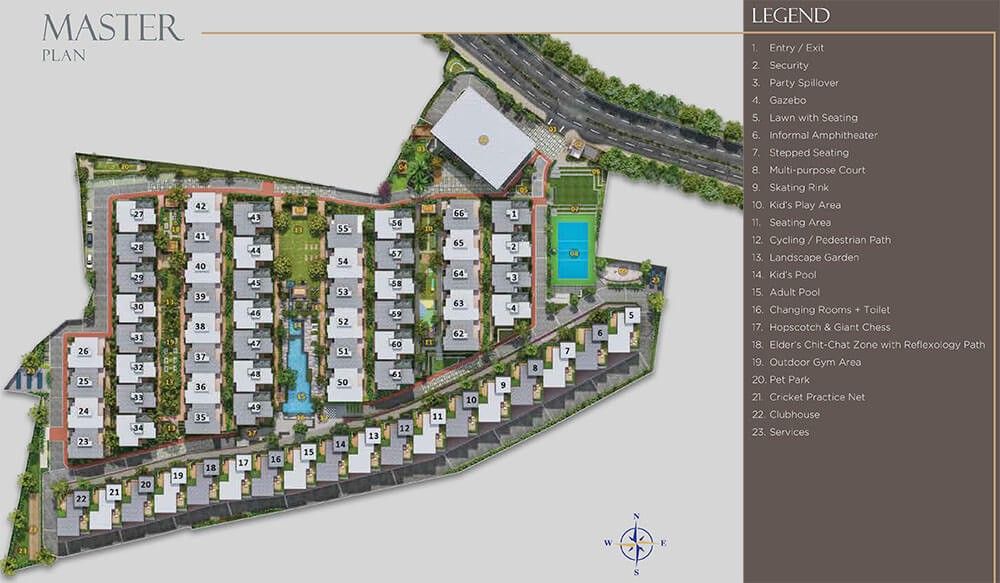
The master plan is the most informative single document a villa buyer can study. It tells you how the land has been divided, where the homes sit in relation to each other, how open space is distributed, and whether the design team was thinking about long-term liveability or simply maximising built-up area within the approvals envelope. For Sattva Springs, the master plan has a clear story to tell.
The Density Math: 66 Homes on 5.5 Acres
5.5 acres is approximately 2,40,000 square feet of land. Divided across 66 villas — before accounting for internal roads, the clubhouse, open spaces, and green zones — the result is that over 85% of the site is open space. The built coverage is a small fraction of the total. In planning terms, that is a genuinely low-density site.
Compare this with a high-rise apartment development on the same land. Builders typically seek 50–70% floor space utilisation. The villa format demands low density almost by definition, and the master plan at Sattva Springs has used that constraint to create an environment that actually feels spacious to live in, not just one that looks green in a site plan render.
Row House Format and What It Means for Privacy
The 66 villas are arranged in row house format — homes share side walls with immediate neighbours, with green buffer zones separating each row from the next. This is an important spatial distinction from fully independent villas, which have open ground on all four sides. In a row house community, you have immediate neighbours to your left and right. The view from the front and back faces either the internal road, the green buffer zone, or the communal landscape beyond.
The green buffer zones between rows are the primary privacy mechanism in the plan. A well-designed buffer creates acoustic separation, visual distance between facing units, and a sense of breathing room that makes the project feel composed rather than compressed. When reviewing the master plan image, look at the gap between parallel rows of homes — a generous buffer is a planning decision that reflects quality of living intent, not just aesthetic preference.
Clubhouse Placement and Internal Circulation
In a well-planned villa community, the clubhouse and key amenities are located accessibly from all units without placing any villa immediately adjacent to the highest-traffic facility. Internal roads should provide clean pedestrian and vehicle movement without routing through-traffic past front doors. The Tree Lane Avenue mentioned in the amenity set signals that the circulation design has received considered attention — a tree-lined internal road changes the quality of everyday movement through the community at a human scale.
When reviewing the master plan, pay attention to: where the main entry gate is positioned relative to the villa rows, whether the clubhouse is reachable from all units within a reasonable walk, how internal roads handle vehicle movement at peak departure times, and whether any villas sit in positions facing service areas or back-of-house infrastructure.
Orientation and Bangalore's Climate
In Bangalore's climate, north and east-facing units are generally preferred. North-facing homes receive indirect, even light without harsh afternoon sun. East-facing homes get comfortable morning light. South and west-facing units can receive intense afternoon sun that drives up cooling loads and makes west-facing rooms uncomfortable in the dry summer months.
The master plan tells you the orientation of each row. This is worth understanding before selecting a specific unit. A corner unit that is also north-facing is typically the most desirable combination — open on two sides with good natural light throughout the day. A mid-row west-facing unit may be the least comfortable configuration in the project, even if the price difference between them is modest. That gap in daily quality-of-life compounds over years of living.
For help interpreting the master plan in relation to specific unit positions, the sales team can provide a guided walkthrough. Review the floor plans alongside the master plan to understand how individual unit layouts relate to the broader site orientation. And for a broader community and amenity context, the amenities page breaks down what each part of the shared infrastructure is designed to deliver.